
Professional Headshot Examples: What Works in Every Industry (2025 Guide)
You need a headshot. You Google "professional headshot examples" hoping for inspiration. And you get... generic advice about "good lighting" and "clean backgrounds."
Not helpful when you're a lawyer trying to look authoritative but not intimidating. Or a startup founder who needs to look polished but not corporate. Or a real estate agent whose face will be on every yard sign and Zillow listing in the neighborhood.
Here's the truth nobody tells you: the headshot that gets a doctor more patients would tank an actor's audition callback rate. What works for a corporate executive looks stuffy on a creative director. Different types of headshots serve different purposes — and industry context matters more than generic "good lighting" advice.
I've seen thousands of headshots through MyPicNow, and the patterns are clear. Let me show you exactly what works in your specific industry, with real examples you can actually use.

Main Takeaway
Your headshot needs to match your industry's unwritten visual language. A lawyer's headshot communicates authority and trust through formal attire and neutral backgrounds. A tech founder's headshot signals innovation through slightly casual styling and warmer tones. A real estate agent's headshot broadcasts approachability because their face literally sells houses. This guide breaks down the exact elements — attire, expression, background, and lighting — that work in every major profession.
The Universal Elements (Every Industry)
Before we dive into industry specifics, here are the non-negotiables that apply everywhere:
Eyes in focus. This is the single most important technical element. If your eyes aren't sharp, the photo fails regardless of everything else.
Natural expression. Forced smiles read as fake. The best headshots capture you between expressions — that moment when your face is relaxed but engaged.
Flattering pose. Head and shoulders with a slight angle works for most professionals. Face the camera at a 15-30 degree angle rather than straight on — it's more dynamic. Keep your chin slightly forward and down to avoid the "double chin" effect.
Appropriate crop. Your face should take up 60-70% of the frame. Too close feels aggressive; too far feels distant.
Clean background. Whether it's a neutral studio backdrop or a contextual office setting, your headshot background should complement — not compete with — your face. Busy backgrounds distract viewers from what matters: you.
Now let's get specific.
Legal Industry Headshots
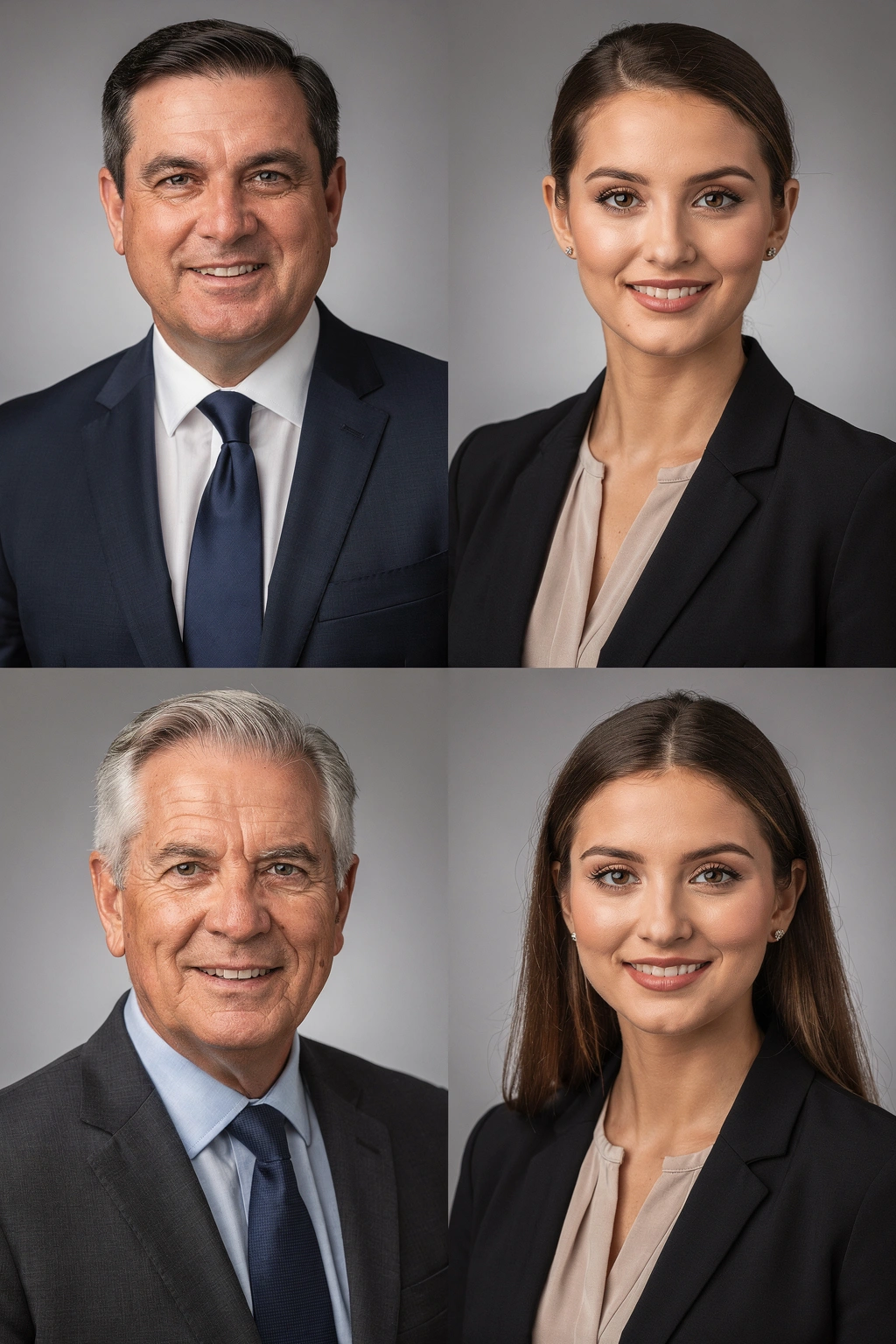
Lawyer headshots have one job: communicate that you're competent, trustworthy, and worth $500/hour.
What Works
Attire: Dark suit (navy, charcoal, or black). White or light blue dress shirt. Conservative tie for men. Professional blouse or suit for women. No flashy patterns — you want clients focused on your face, not your fashion choices.
Expression: Confident but approachable. The slight "I've got this handled" look that reassures clients you'll fight for them. Avoid the death stare that says "I'll bill you for every bathroom break."
Background: Neutral gray or office setting with law books visible (if authentic). Some attorneys do well with firm lobby backgrounds. Avoid anything too creative — this isn't the industry for it.
Lighting: Even, professional studio lighting. Slightly dramatic lighting can work for criminal defense attorneys who want to project strength.
Common Mistakes
- Looking too stern (clients need to feel they can talk to you)
- Casual attire (even "business casual" reads unprofessional in law)
- Busy backgrounds (that cluttered desk says "disorganized")
- Arms crossed (defensive posture kills trust)
The Verdict
Legal headshots are conservative by design. When a client is choosing between attorneys, they're subconsciously asking: "Does this person look like they can handle my case?" Your headshot answers that question before they read a single word of your bio.
Healthcare Industry Headshots
Doctor headshots and nurse headshots balance professionalism with approachability. Patients need to trust your competence AND feel comfortable with you.
What Works
Attire: White coat for physicians (still the gold standard for trust). Scrubs work for surgeons and emergency medicine. Business professional works for administrators and non-clinical roles.
Expression: Warm, compassionate, but confident. The "I'll take care of you" look. Patients Google their doctors — your headshot might be the first impression before they even book an appointment.
Background: Clean clinical setting (not too sterile), neutral gray, or soft gradient. Avoid anything that looks cold or intimidating.
Lighting: Soft, even lighting that creates a welcoming feel. Harsh shadows make you look tired — not ideal when patients want their doctor to be alert.

Specialty Considerations
- Pediatricians: Warmer backgrounds, friendlier expressions — parents are choosing someone to care for their kids
- Surgeons: More serious expression acceptable — patients want confidence, not warmth, from the person cutting them open
- Psychiatrists/Therapists: Approachable above all — patients need to feel they can open up
- Dentists: Smile showing teeth (obviously) — you're literally in the smile business
Common Mistakes
- Looking exhausted (even if you are after a 36-hour shift)
- Stethoscope awkwardly posed (looks staged and cheesy)
- Generic stock photo backgrounds (patients can tell)
- Overly casual attire (even in relaxed practices)
Real Estate Industry Headshots
Real estate agent headshots are unique because your face IS your marketing. It goes on yard signs, business cards, Zillow listings, mailers, and every piece of marketing you'll ever create.
What Works
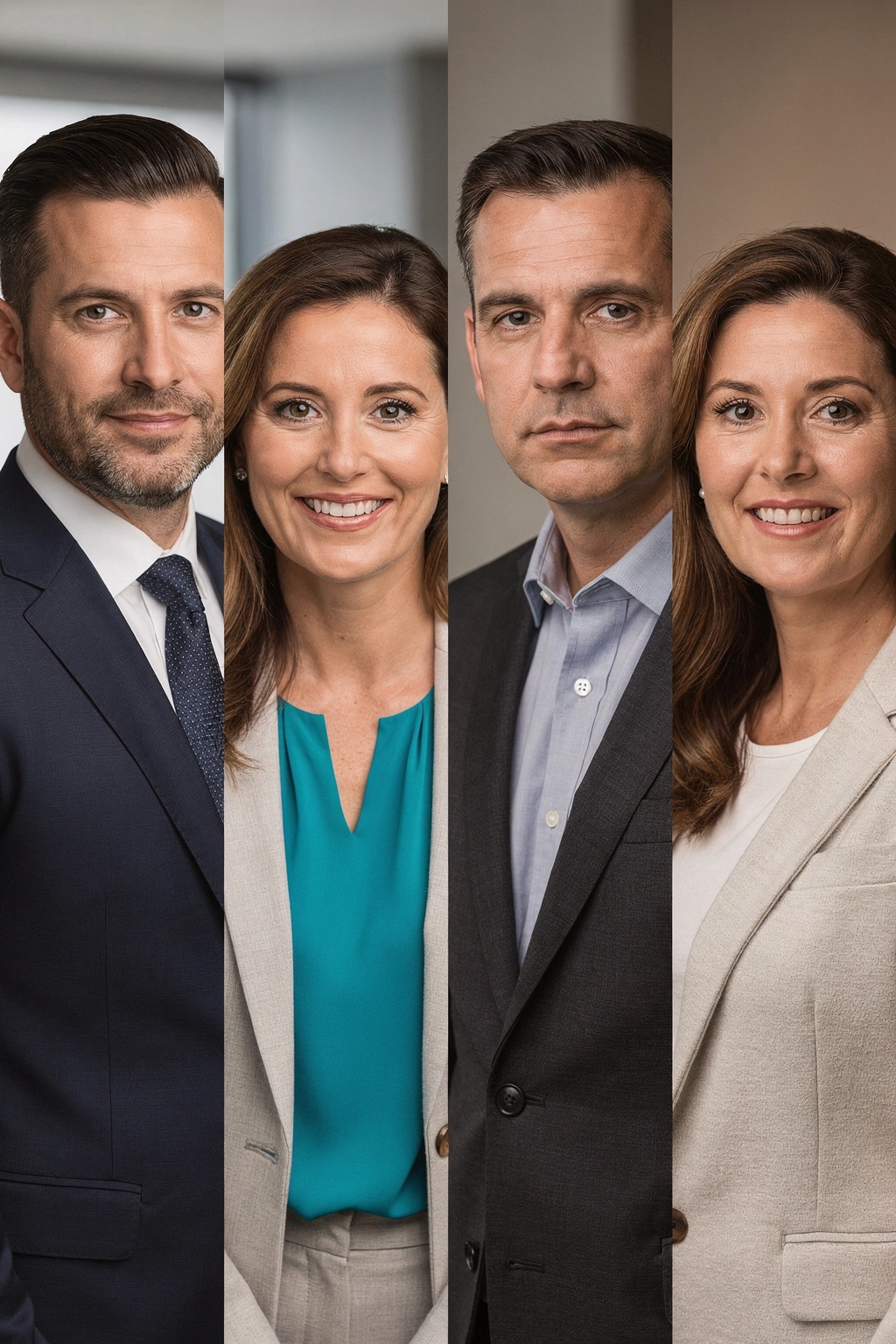
Attire: Professional but approachable. Bright colors work here (unlike law). A pop of color makes you recognizable across marketing materials. Avoid dated looks — real estate is trendy.
Expression: Warm, genuine smile. You're asking people to trust you with the biggest purchase of their lives. Look like someone they'd want to spend hours in a car with touring houses.
Background: Neutral or lifestyle settings. Outdoor headshots work especially well for real estate — they convey energy and accessibility. Just avoid the cheesy "arms crossed in front of a McMansion" pose.
Lighting: Bright, flattering light that makes you look energetic and positive. Real estate is a high-energy business — your headshot should reflect that.
Market Considerations
- Luxury real estate: More polished, slightly more formal — you're selling $5M homes
- First-time buyers: Ultra approachable — these clients are nervous and need hand-holding
- Commercial real estate: More corporate, similar to finance — you're dealing with investors and businesses
Common Mistakes
- Outdated photos (if your headshot is 10 years old, buyers wonder what else you're hiding)
- Over-glamorized shots (you're not selling yourself, you're selling houses)
- Poor quality that doesn't scale well to yard signs
- Inconsistent branding across platforms
Technology Industry Headshots
Tech headshots and startup founder photos walk a fine line: professional enough to be taken seriously, casual enough to signal you're innovative.
What Works
Attire: Depends on role and company stage. Early-stage startup? Quality t-shirt or casual button-down works. Enterprise sales? Business casual minimum. Engineering? Clean casual is fine — your code speaks louder than your suit.
Expression: Thoughtful, approachable, slightly curious. Tech thrives on collaboration — your headshot should make you look like someone worth collaborating with.
Background: Clean, modern settings. Subtle tech elements can work but avoid clichéd "standing in front of server racks" setups. Gradient backgrounds work well for LinkedIn.
Lighting: Modern, slightly creative lighting. Tech is more forgiving of slightly artistic approaches than traditional industries.

Role Considerations
- Founders: More polished — you're raising money and need to look credible
- Engineers: Clean casual — your GitHub matters more than your photo, but still look put-together
- Product managers: Business casual — you're the bridge between tech and business
- Tech executives: Executive-level polish — you're representing the company
Common Mistakes
- Too corporate (looks like you don't understand the culture)
- Too casual (hoodie and unshowered doesn't play well outside SF)
- Trying too hard to look "innovative" (the glasses-and-turtleneck-Jobs-cosplay is played out)
Finance & Consulting Headshots
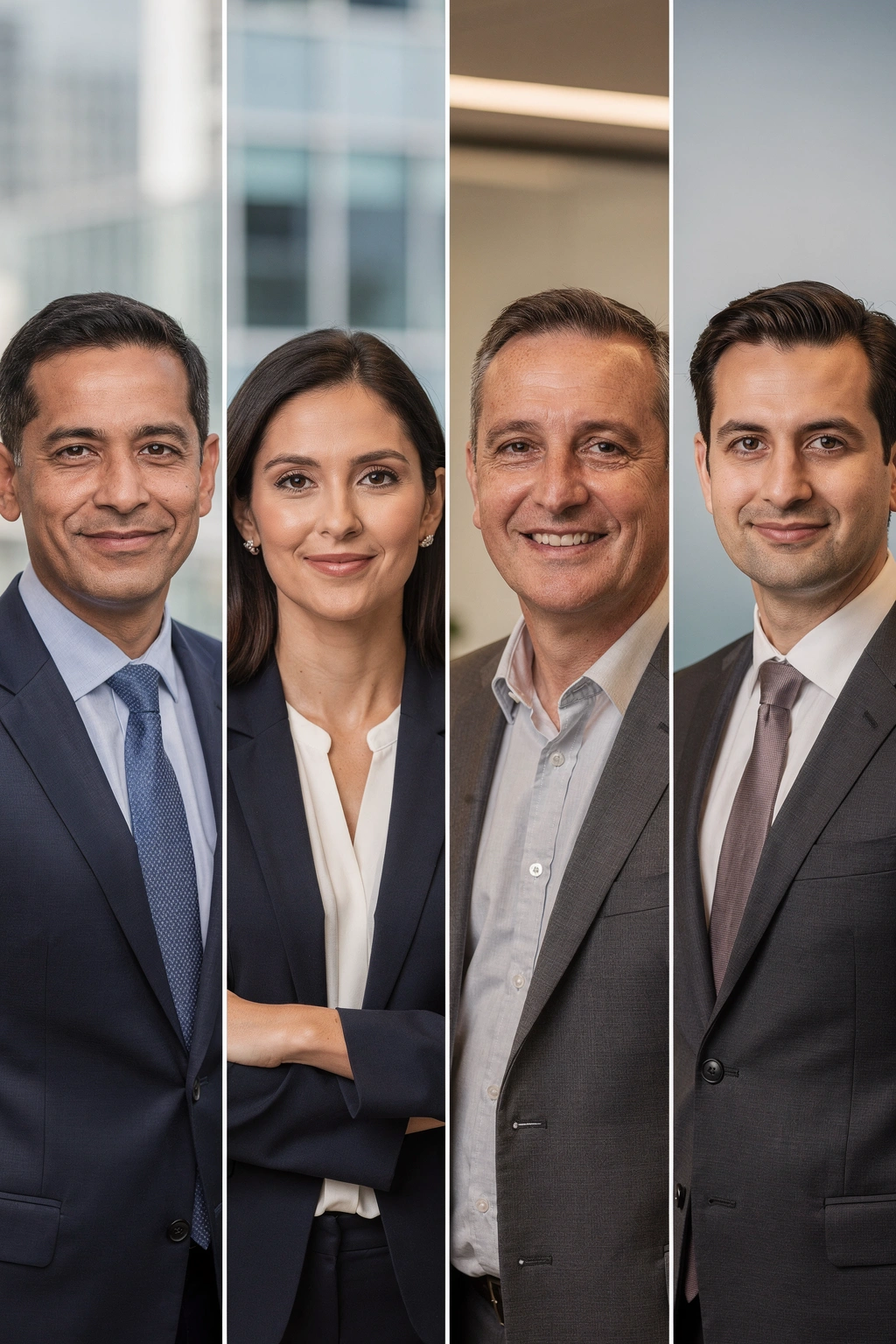
Financial advisor headshots, banker photos, and consultant headshots all share one requirement: you need to look like someone people should trust with their money.
What Works
Attire: Suit and tie (men), professional suit or dress (women). This is one of the most formal industries — dress accordingly. Navy and charcoal dominate. Avoid flashy accessories.
Expression: Confident, competent, trustworthy. The "your money is safe with me" look. Slight smile acceptable but not required — gravitas matters here.
Background: Clean office, neutral studio, or subtle cityscape. Financial districts work for banks. Avoid anything too creative.
Lighting: Classic, even lighting. No dramatic shadows — you want to look stable and predictable, not mysterious.
Segment Considerations
- Wealth management: Polished but approachable — you're dealing with families and their legacies
- Investment banking: More formal, slightly more intense — you're doing deals, not holding hands
- Financial planning for younger clients: Can be slightly less formal — relatability matters
- Management consulting: Corporate polish — you're advising Fortune 500 executives
Common Mistakes
- Looking too casual (instant credibility killer)
- Stiff, uncomfortable expressions (finance already has a trust problem)
- Outdated styling (markets move fast, so should your image)
Creative Industry Headshots
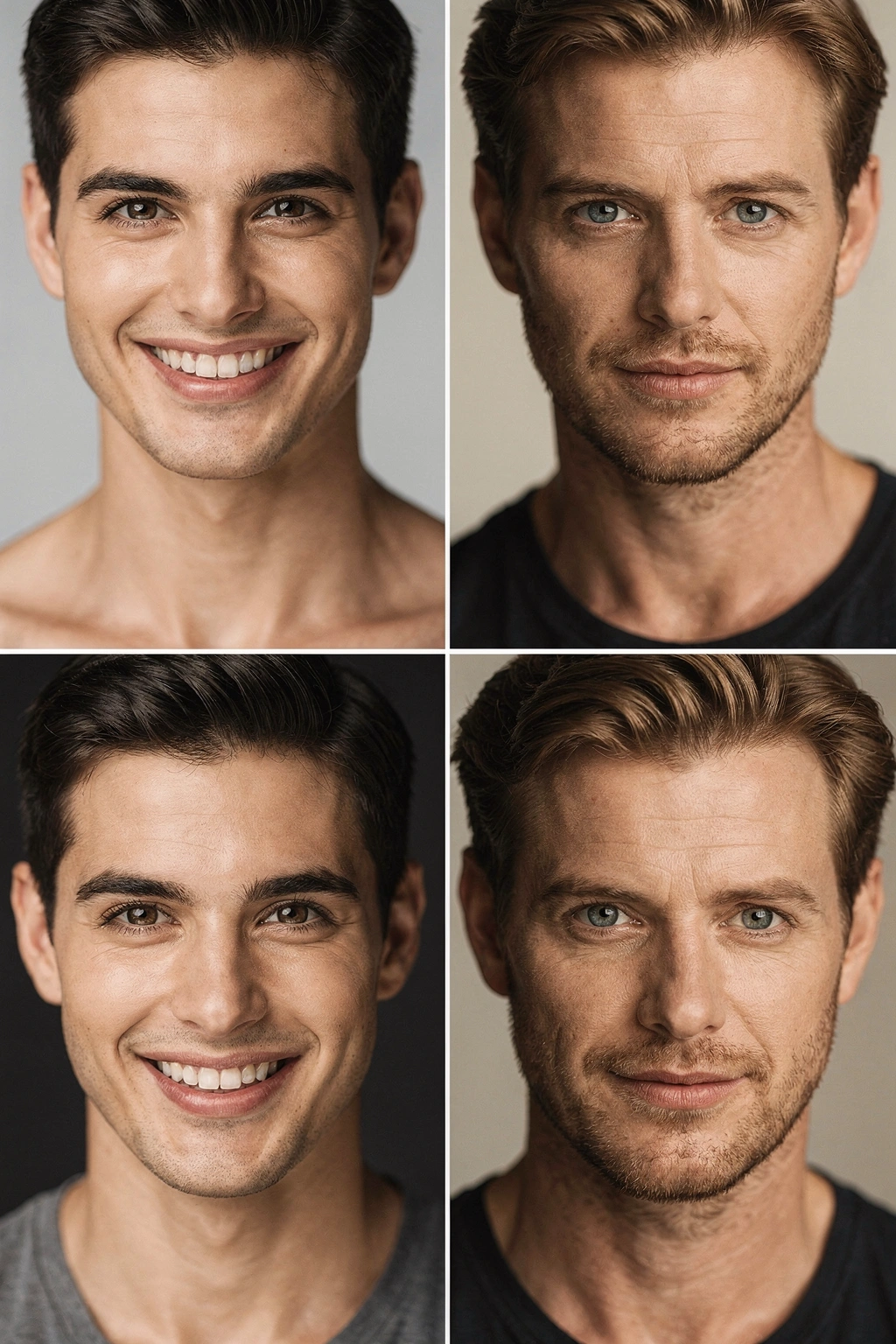
Actor headshots, model headshots, and content creator photos play by completely different rules. Here, personality and range matter more than conformity.
What Works (Actors)
Attire: Simple, solid colors that don't distract. The focus is entirely on your face and expressions. Avoid logos, patterns, or anything that dates quickly.
Expression: Range matters. You need commercial headshots showing approachable, friendly expressions for advertising work AND theatrical headshots with dramatic intensity. Casting directors cast types — commercial headshots get you commercial work, dramatic shots get you film auditions. Show your range.
Background: Simple, clean backgrounds that don't compete with your face. White, gray, or subtle gradients work best.
Lighting: Professional studio lighting that highlights your bone structure. This is one industry where slightly dramatic lighting works well.
What Works (Models)
- Strong bone structure highlighting
- Multiple looks showing versatility
- High-end, editorial-quality lighting
- Clean backgrounds or relevant settings
What Works (Influencers/Creators)
- Personality-forward styling
- Bright, engaging expressions
- Background can reflect your niche
- Quality matters — your audience judges production value
Common Mistakes
- Same expression in every shot (show range)
- Over-retouched to the point of looking plastic
- Poor quality photos (casting directors see thousands — yours needs to stand out)
- Outdated headshots (industry moves fast)
Corporate & Executive Headshots
Executive headshots and corporate headshots signal seniority, competence, and leadership.
What Works
Attire: Suit for C-suite and senior roles. Business professional minimum. Quality matters — executives wear quality clothing.
Expression: Confident, approachable leadership. The "I make decisions" look balanced with "I'm not a robot." Eye contact is crucial — leaders connect.
Background: Office settings, neutral studio, or subtle corporate environments. Consistency matters for team pages.
Lighting: Professional, even lighting. Slightly dramatic for more senior executives can work to convey gravitas.

Level Considerations
- C-Suite: Most polished, slightly more formal than rest of team
- VP/Director: Professional but approachable
- Manager: Match company culture, lean professional
- Team pages: Consistency across all headshots matters more than individual styling
Common Mistakes
- Looking unapproachable (leadership requires connection)
- Inconsistent quality on team pages (everyone should match)
- Outdated photos (especially problematic for execs who've aged significantly)
Other Professions
Authors & Writers
Author headshots appear on book jackets, Amazon, and press materials. Genre matters — romance authors can be warmer, business book authors more corporate.
Public Speakers
Speaker headshots need to work at conference scale. High resolution, strong expressions, and professional polish for event marketing.
Educators & Academics
Professional but approachable. Students and colleagues need to see you as knowledgeable AND accessible.
Non-Profit Leaders
Balance professionalism with warmth — you're leading with mission, not money.
How to Get Industry-Appropriate Headshots
You have three main options:
| Option | Cost | Time | Best For |
|---|---|---|---|
| Professional Photographer | $300-800 | Half day + waiting | High-stakes executive photos, actors |
| DIY iPhone | Free-$20 | 1-2 hours of trial and error | Budget-conscious, basic needs |
| MyPicNow AI | $19+ | 8 seconds per photo | Multiple industries, frequent updates |
The smart approach: Use MyPicNow to generate industry-specific headshots for each platform you use. Need a formal version for your law firm website AND a slightly warmer version for LinkedIn? Generate both from the same upload.
FAQ
Q: How often should I update my professional headshot?
Whenever your appearance changes significantly — new haircut, glasses, major weight change. For most people, every 2-3 years keeps your image current. Real estate agents should update more frequently since their face is their primary marketing asset.
Q: Can I use the same headshot for LinkedIn and my company website?
Usually, yes. But consider whether the contexts are different — your LinkedIn might benefit from a slightly warmer expression than your official company bio page. With MyPicNow, you can generate multiple versions optimized for each platform.
Q: What's the biggest mistake people make with professional headshots?
Not matching their industry's visual expectations. A fantastic creative headshot will hurt a banker's credibility. A perfect corporate headshot will make an actor look bland. Know your industry's unwritten rules.
Q: Should I smile in my professional headshot?
Depends on your industry. Real estate and customer-facing roles: yes, warm smile. Law and finance: slight, confident smile or neutral. Creative: varies by the "type" you're conveying. Medical: warm and approachable without being goofy.
Q: How important is headshot background in a professional photo?
More important than most people realize. The ideal background depends on your industry: neutral gray or white for corporate and legal, office settings for executives, creative environments for artists. A busy or inappropriate backdrop (like a beach scene for a corporate headshot) undermines your message. When in doubt, go neutral. You can explore our LinkedIn backgrounds for ideas.
Q: Are AI-generated headshots professional enough for my industry?
With the right tool, absolutely. MyPicNow creates photorealistic headshots that are indistinguishable from traditional photography. Thousands of lawyers, doctors, executives, and professionals use AI headshots for LinkedIn, company websites, and marketing materials.
Q: What should I wear for professional headshots in a creative industry?
Express your personal style while keeping the focus on your face. Solid colors work best. Avoid logos, busy patterns, or anything that dates quickly. Your clothing should complement your face, not compete with it.
Q: What are the best headshot poses for professionals?
The best headshot poses typically feature your body at a slight angle (15-30 degrees) to the camera while your face turns toward the lens. Keep your chin slightly forward and down. Shoulders should be relaxed, not hunched. For most professionals, a straight-on pose works for approachability, while an angled pose conveys authority. The right pose depends on your industry and the impression you want to make.
Q: How many headshots do I actually need?
Most professionals need 2-3 versions: one for LinkedIn, one for company website, and possibly one slightly more casual version for personal branding. Actors need multiple shots showing range. Real estate agents benefit from several versions for different marketing materials.
Final Thoughts
Your headshot is doing a job: communicating your professional identity in a split second. The examples in this guide show you what works in your specific industry — not generic advice that ignores context.
Whether you're a lawyer building client trust, a doctor conveying competence, or a startup founder signaling innovation, your headshot needs to speak your industry's visual language.
The good news? Getting industry-appropriate headshots doesn't require expensive photographers or complicated setups. With MyPicNow, you can generate professional headshots tailored to your exact industry in 8 seconds.